
The sheer scale of the attempted scams against customers of VodafoneThree's brands is matched only by the canny tech knowhow and proactive partnerships that the company uses to fight back.
The sheer scale of the attempted scams against customers of VodafoneThree’s brands is matched only by the canny tech knowhow and proactive partnerships that the company uses to fight back.
It’s a silent battle fought every day across the radio waves and fibre optic cables that make up VodafoneThree’s networks.
On one side are fraudsters attempting to trick individuals and businesses into handing over their valuable, sensitive data by using scam calls and texts.
On the other side are VodafoneThree’s dedicated anti-fraud specialists, dedicated to thwarting them and protecting the company’s customers.
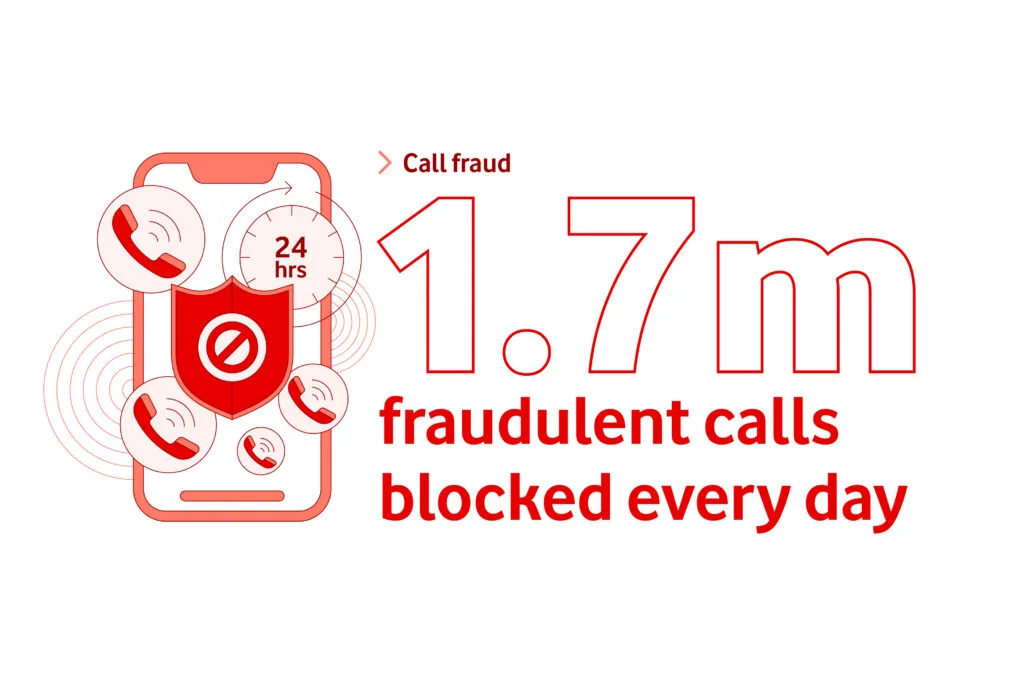
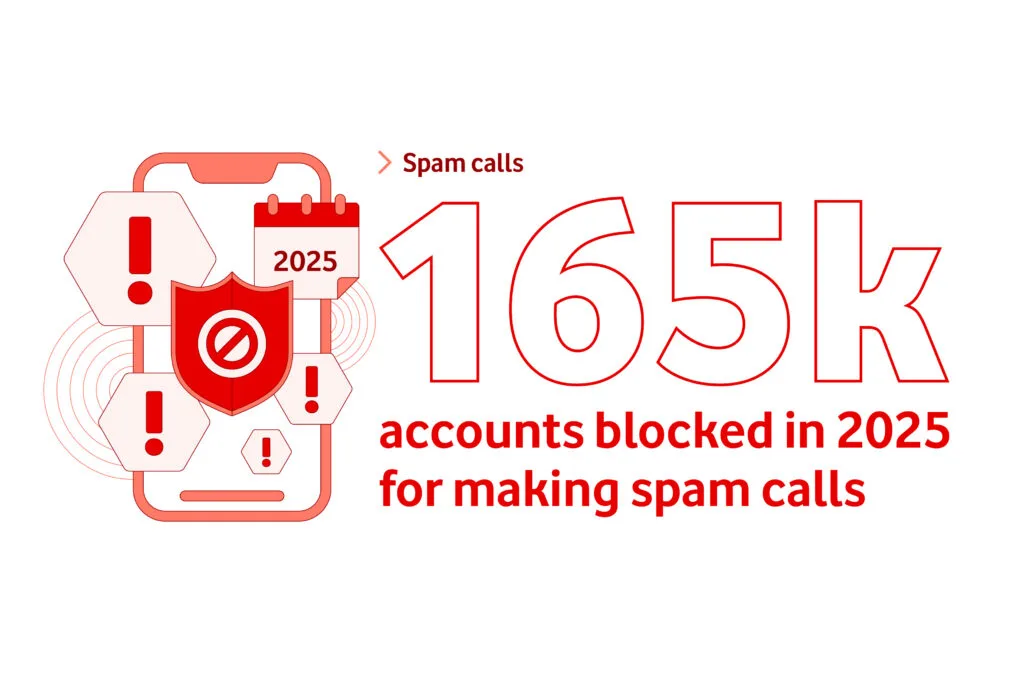
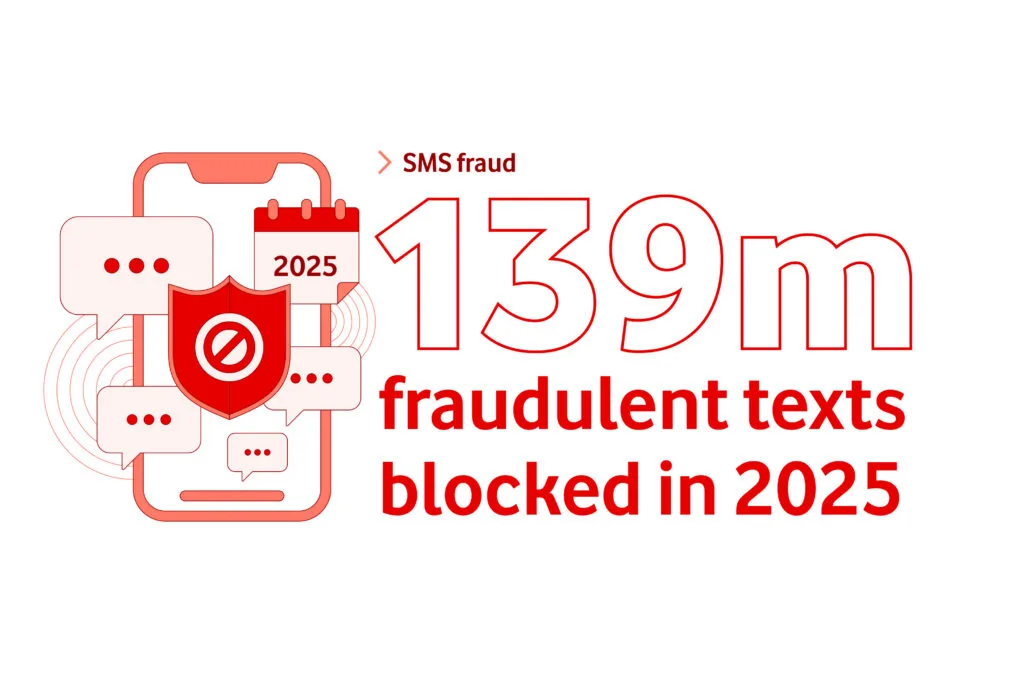
Despite the fraudster’s increasingly sophisticated tactics, VodafoneThree is winning, as the latest statistics show:
How VodafoneThree uses technology to identify suspicious, potentially fraudulent behaviour
VodafoneThree uses artificial intelligence (AI) to identify patterns, relationships and anomalies in behaviour on its networks that could be indicators of fraudulent activity.
For example, if a number sends too many messages too quickly, or exactly the same message is sent to many people, then it is automatically flagged for investigation.
As a result of these proactive efforts, many scams can be stopped from reaching customers in close to real time. Indeed, fraud detection rates have risen by 44% since the adoption of AI for this task.
AI is used since it can do this work far faster than people can, despite the gargantuan amounts of data involved.
How VodafoneThree’s improved procedures and policies can help block scams
VodafoneThree’s brands continually improve their procedures and policies. An example is when a Vodafone SIM swap is requested.
When a request is received, a one-time authentication code, as well as follow-up confirmations, are sent to the customer before a SIM swap can take place.
This helps reduce fraudulent activity, while still allowing genuine customers to make legitimate SIM swaps if they need to.
Such improved procedures and policies can trace their birth back to the work of the company’s dedicated fraud monitoring team.
This team is constantly on the lookout for new tactics, methods and other tricks of the trade being adopted by fraudsters. After all, knowing how cybercriminals work is the first step to stopping them in their tracks.
How other companies use VodafoneThree’s tech to stop scammers
Scammers attempting to trick VodafoneThree’s customers will often want to target all their other accounts and data too, not just their phone and broadband account details.
That’s why other companies, such as banks, can hook their systems into VodafoneThree’s technology in order to better spot suspicious behaviour that could be fraudulent. Andy Yorston, General Counsel and Company Secretary at VodafoneThree, explains how these APIs work.
VodafoneThree also supports initiatives such as the Home Office’s ban on SIM farms, as well as public awareness campaigns.
What Vodafone and Three customers can do to help protect themselves against fraud
1. Be wary of any unexpected calls or messages
If anyone is claiming to be from any company or organisation and it doesn’t feel right, ignore, call or email them back on their official number.
2. Verify the caller’s identity
If you receive an unexpected call from someone claiming to be from a trusted organisation, ask for their name, department, and a callback number. Then, verify their identity by calling the organisation’s official number, which you should be able to find on their website.
3. Never share a one-time code or personal information
Unless you are sure you are speaking with, or have yourself contacted, a legitimate business. Legitimate companies will never ask for sensitive information, such as your bank details, online passwords or PINs over the phone or via SMS.
4. Don’t ignore fraud warnings
That goes for both text messages or calls on your handset. Always report unexpected notifications, particularly about account changes.
5. Report scam/unwanted messages
Forward these to 7726 (the UK’s free number for reporting spam texts and scam calls), followed by the sender when requested. Alternatively, tap ‘Report Spam’ on Android phones and ‘Report Junk’ on iPhones.
6. Report nuisance calls
You can do this by texting the word ‘CALL’, followed by the caller’s number within the same message (e.g. ‘CALL 07123123123’), to 7726.
7. If in doubt, don’t tap on any link, or call a number contained within the message
Instead, manually enter the website’s address in your browser or use the official app to find the organisation’s official number.
8. Scam messages are not limited to SMS texts
Scams are also sent over iMessage, RCS (the Android equivalent), WhatsApp, Facebook Messenger and any other messaging or social media service available. Be vigilant and question every unexpected message received.
9. Install call blocking and SMS filtering apps
These apps can help identify and block potential spam and fraudulent contacts, reducing the risk of falling victim to scams.