Designed to ensure everyone can benefit from internet connectivity, the National Databank is delivered through a network of more than 3,500 Digital Inclusion Hubs, run by community-based services throughout the UK.
Described by creators Good Things Foundation as ‘like a foodbank, but for mobile data’, the National Databank has gone from strength to strength since its inception during the COVID-19 pandemic.
To support the programme, Vodafone UK pledged 24 million gigabytes (GB) of data at the beginning of 2022 – enough to connect 200,000 people across the United Kingdom.
These donations take the form of Vodafone SIM cards, each loaded with 40GB of data each month, alongside unlimited calls and texts, for six months.
Having now met its initial target, Vodafone UK News reached out to one of the charities helping to further the cause – Birmingham-based charity Smartlyte – to hear first-hand how each SIM makes more of a difference than many could ever imagine.
Vodafone pledges 24 million GB of data to the National Databank to connect 200,000 people across the UK
The donated data is enough to connect 200,000 people across the UK for six months.
A little more conversation
“I can’t tell you what it means for us to be part of the National Databank,” says Hafsha Dadabhai-Shaikh, Founder and Director of Smartlyte.
“‘Transformative’ is probably the word that I would use when you’re able to give people data so that they don’t have to limit themselves when using it, and they can just use it for whatever they want.”
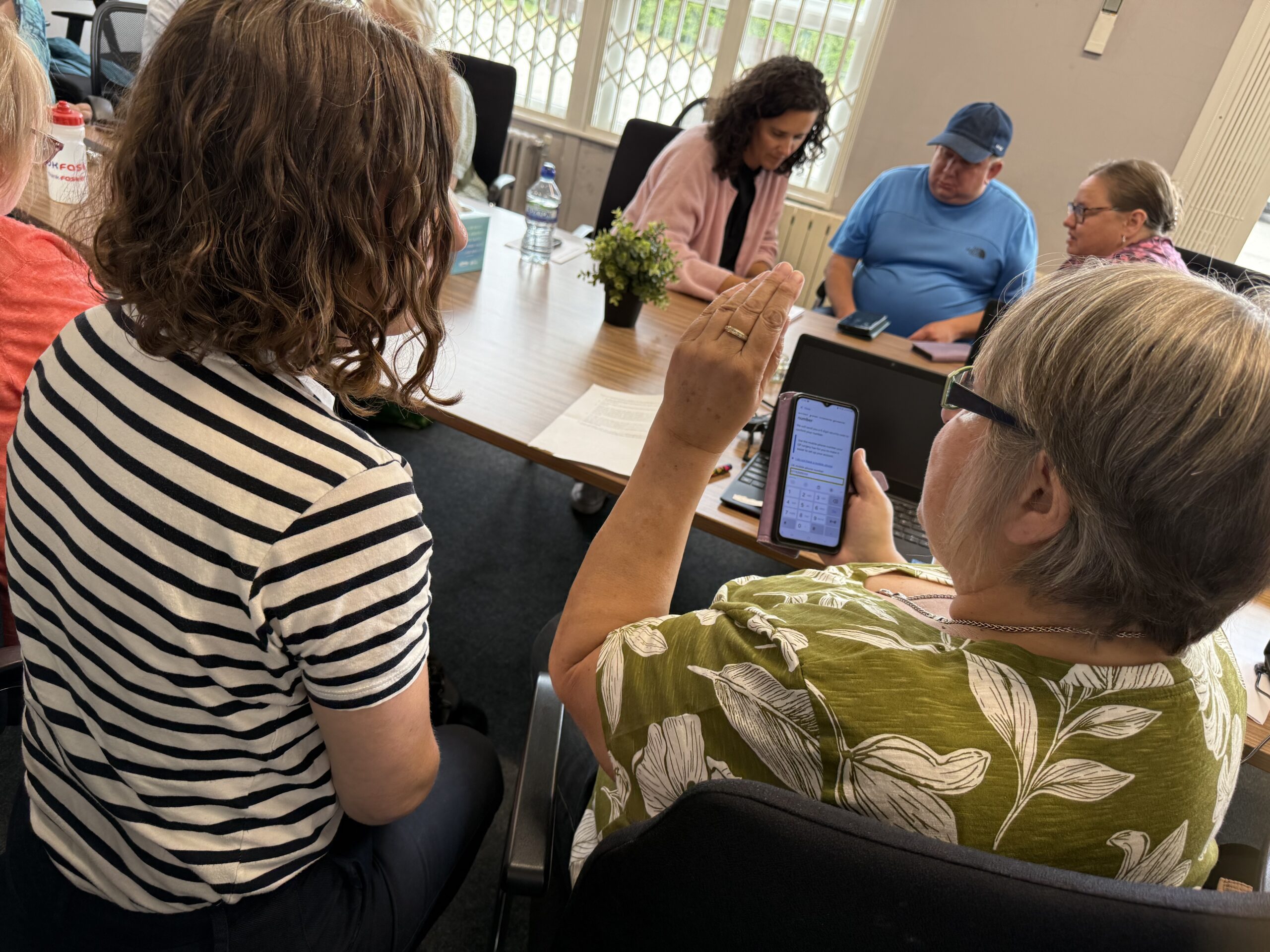
For Smartlyte, those on the receiving end of this data are often parents. Specifically, parents that may lack the digital literacy needed to support themselves and their children in today’s increasingly digital world.
This may involve teaching them how to use online services, but it also helps give them the freedom and confidence to visit and experience new spaces in the local area – from parks to universities.
“Without the requisite language or digital skills, they don’t get access to this information,” explains Hafsha. “Their worlds can sometimes seem really small, because they don’t believe they have the social capital to go further than the little area that they’re familiar with.”
“We know, however, that if we can help parents to learn these skills and have these experiences, then it can have a hugely positive impact on their children.
“It all helps to enrich the conversations they have at home and open up the opportunities that may be available to their child.”
IT Reuse for Good charter launched to help businesses donate old devices
VodafoneThree has teamed up with Deloitte UK, Good Things Foundation and the Department for Science, Innovation and Technology (DSIT) to provide businesses with a means of donating old devices.
Health is wealth
With the National Databank having been born out of the pandemic, it’s fitting that digital health is a big focus for Smartlyte.
While the NHS App now boasts 37.4 million registered users, that still leaves roughly a quarter of the UK’s adult population without an account.
While some of these may not have any need to use the service, the UK’s prevailing digital divide means that part of this figure will comprise of those unwillingly excluded due to a lack of connectivity or digital skills.
“Digital health is a really big piece of work for us,” says Hafsha, “because we operate in an incredibly deprived area, so we’re trying to help change the narrative.
“It could be that we’re based at a local health centre for the day, helping patients get the data they need to get online or teaching the skills they need to use the NHS App.
“We are also an Ambassador Centre for Good Things Foundation, which means we support them in other areas of work, such as helping smaller community organisations to become digital hubs.”
Fear, uncertainty and doubt: why some people don't have digital skills
No matter why people don’t have digital skills, the Good Things Foundation - one of Vodafone's everyone.connected charity partners - helps people learn the basics, so they can make the most of the online world.
Creating connections
Regardless of where Smartlyte focuses its attention, the work they do always centres on helping the individual in front of them.
Like John, a father of two with a terminal illness. Having been struggling to keep in touch with his daughter on the 1GB that he was able to afford at the time, Smartlyte gave him a SIM card loaded with 40GB.
Not only did this result in a few tears, but it also led to his daughter coming to visit with her 18-month-old child, after several years of being apart.
Or Chris – also suffering from a terminal illness – who would save what little mobile data he had in order to phone his mum in America once a week.
After providing him with a new SIM, he was able to call her three times that week, leading to her asking if he had won the lottery.
“For lots of people in the communities, especially if they’ve got low language or digital skills, it can be quite complicated if you give somebody a SIM and say ‘this is what you have to do [to use it] on a monthly basis’,” says Hafsha. “Which is why we absolutely love working with the Vodafone SIM cards, because they are so easy to use.”
Learn more about the National Databank on the Good Things Foundation website, and stay up to date with the latest news from VodafoneThree by following us on LinkedIn and Twitter/X.