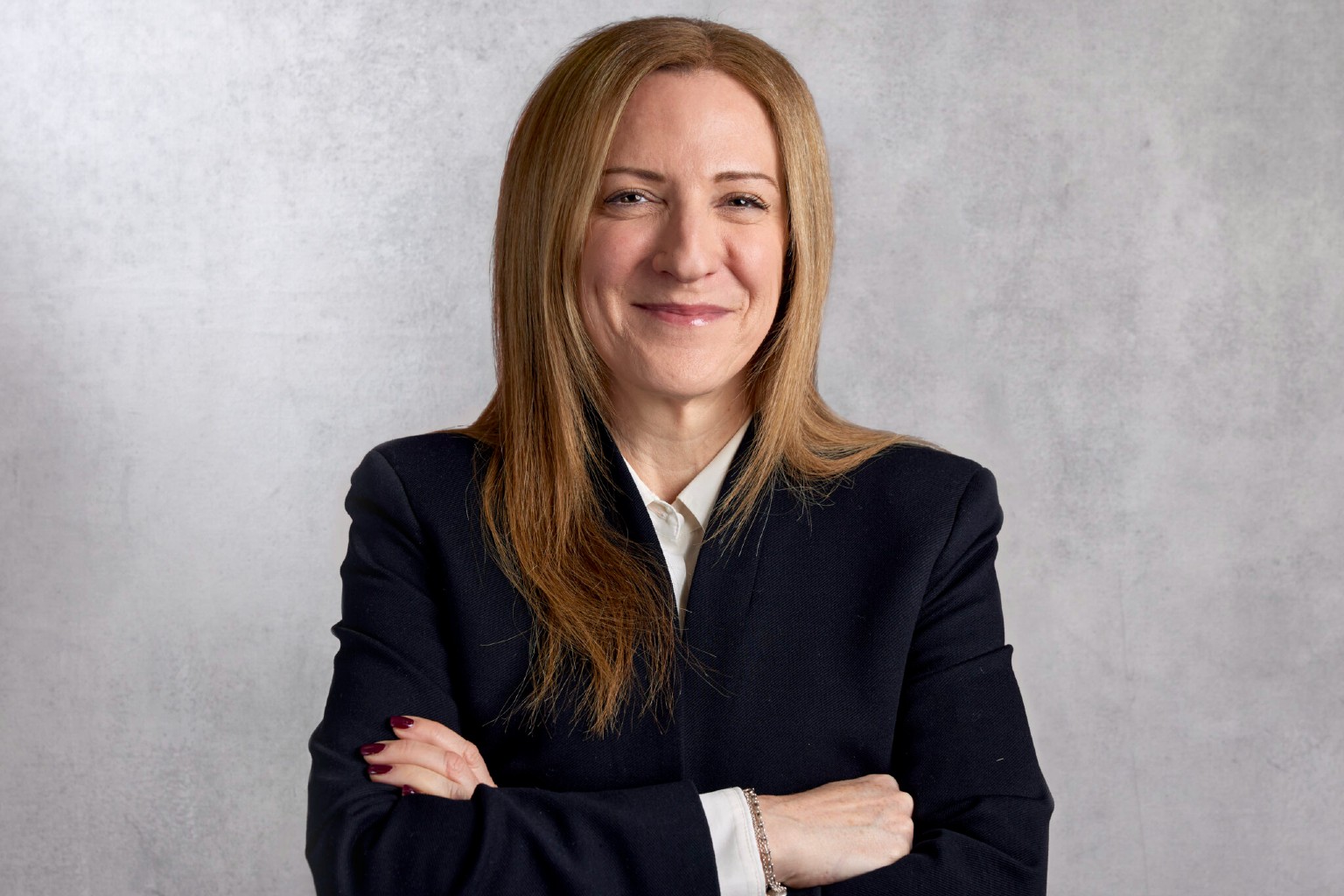
Two years after Vodafone’s ‘The rise of the aggro-rithm’ campaign highlighted how harmful AI algorithms target young males, VodafoneThree’s Corporate Affairs & Sustainability Officer, Nicki Lyons, revisits the growing impact of the manosphere – as explored in Louis Theroux’s latest documentary.
‘Feminism has gone too far.’ ‘Modern society is inherently biased against men.’ ‘Wives should obey their husbands.’
Take a quick trip to the online manosphere and these are just some of the archaic, toxic views that you’ll encounter.
While these statements would seem out of place in most other settings, when paired with familiar content creators and powered by online algorithms, they take on an alarming level of influence.
More worrying still, the target audience in this case – teen and tween boys – are fed this negative content at an equally alarming rate.
Because, when I describe a ‘quick trip to the manosphere’, I’m really describing the time it takes to open an app and scroll for, sometimes, just a few seconds. An action that most of us take each and every day.
Safer Internet Day 2026: Almost a third of children who use AI chatbots see them as friends
This Safer Internet Day, Vodafone is launching a new campaign spotlighting the ‘ingredients’ of AI chatbots, as new research reveals how a lack of safe design and a chatbot’s human-like characteristics are influencing the way children engage with them
How the manosphere became mainstream
This proximity is, in part, where the issue lies for those of us fighting against the manosphere.
Once-fringe views are not just readily available at the tap of a finger, but are gradually becoming more commonplace and, dare I say, accepted in everyday life.
From reality television contestants to more public figures, these views have made the jump from the fringe to the forefront. All through a process of normalisation – or ‘normiefication’ to use the online vernacular – that the modern media ecosystem has made unnervingly efficient.
So efficient, in fact, that a quarter (24%) of 11-14-year-old boys surveyed by VodafoneThree said it took them less than a minute of being online to see content that is negative about women and girls.
24% of 11-14-year-old boys said it took them less than a minute of being online to see content that is negative about women or girls.
It’s a phenomenon that Louis Theroux explored in his recent Netflix documentary, ‘Louis Theroux: Inside the Manosphere’, which sees the documentarian get up close and personal with some of the biggest names in this world.
During the programme, Theroux highlights how algorithms are influencing the decisions of both creators and consumers of this content.
By doing so, he exposes the systems and networks that allow these radical ideas to reshape young men’s views on masculinity – in a not too dissimilar way to Vodafone’s ‘The rise of the aggro-rithm’ campaign, launched to mark Safer Internet Day 2024.
AI ‘Aggro-rithms’: young boys are served harmful content within 60 seconds of being online
On Safer Internet Day 2024, Vodafone released a new film ‘The Rise of the Aggro-rithm’ to highlight the harmful AI algorithms targeting Britain’s teen and tween boys.
Getting to the root cause of modern misogyny
Both share another similarity, however, which is the sense that much of this toxic masculinity thrives on vulnerability.
Just as Theroux’s documentary reveals moments of vulnerability within some of the influencers themselves, it’s increasingly clear that the content being created in the manosphere is designed to entice young, impressionable minds.
It’s why our ‘Aggro-rithm’ campaign focused on the male side of the equation, as it is often boys’ exposure to harmful online content that triggers the negative view of their female peers.
All of which forces us to think deeply about the root causes that sit just under the surface – namely, the algorithms that are generating this endless content cycle.
Why, for example, do 17% of 11-14-year-old boys get served content that makes them feel bad about themselves without searching for it? A figure that is more than double the 7% reported in 2024.
Or, to take one step back, why are the influencers responsible for this content so significantly incentivised to keep creating it in the first place?
The Open Line: Two Vodafone colleagues discuss parenting in the digital age
With Vodafone UK’s latest campaign, ‘The Open Line’, urging parents to break the silence around online safety, we asked two current Vodafone employees about the digital challenges facing parents.
Is safety by design still the gold standard?
These questions raise a longstanding preoccupation of ours at VodafoneThree when it comes to children’s digital wellbeing: safety by design.
A safety-by-design approach is one that builds risk mitigation into the earliest stages of online products, systems or platforms. In other words, it’s one that could help curtail these algorithms at the outset.
While this may sound like a wholly sensible approach, in too many cases, the genie is already out the bottle. As a result, industries are left flailing as they attempt to reactively retrofit safeguards to a system that effectively monetises potentially harmful behaviour.
A safety-by-design approach is one that builds risk mitigation into the earliest stages of online products, systems or platforms. In other words, it’s one that could help curtail these algorithms at the outset.
For some, the UK’s Online Safety Act is a good case in point. While many heralded the Act as a ‘seatbelt moment’ for children’s safety online, others argue that such a step can only help so much when the equivalent ‘vehicles’ – or even the ‘road networks’ – are not designed to the same safety standards.
Though I can understand the scepticism to a degree, I’ve written previously about how we must view the Online Safety Act as a “living, breathing” process, rather than a one-off silver bullet. And I increasingly stand by this approach.
No silver bullets: A safer online world won’t happen without long-term change
Online safety is one of the most important issues of our times, one that requires a measured, long-term and deft approach, argues Nicki Lyons, VodafoneThree’s Chief Corporate Affairs and Sustainability Officer.
How VodafoneThree is helping to keep children safe online
In fact, as another recent documentary, Molly Vs The Machines, reminds us, there are living, breathing humans involved at every link in this chain.
By acknowledging this, we’re forced to find the humanity at stake. Whether that’s of the people who develop the platforms, the creators who use them, or the young people that are ultimately affected by them.
And with humanity, comes agency, giving us the ability to change the outcomes ahead of us.
Which is exactly what we’re aiming to do at VodafoneThree, by: working with our partners to raise awareness of these issues; helping Government shape important legislation; and providing families with the resources they need to keep their families safe.
After all, as Theroux puts it: “we are all increasingly inside the manosphere, and it’s up to us how we get out.”
Visit Vodafone UK’s Digital Parenting hub to find the latest expert advice, including our safe phone toolkit created with the NSPCC, and Digital Parenting Pro, one of the UK’s largest parental controls and safety settings resources.
Stay up to date with the latest news from VodafoneThree by following us on LinkedIn and Twitter/X.